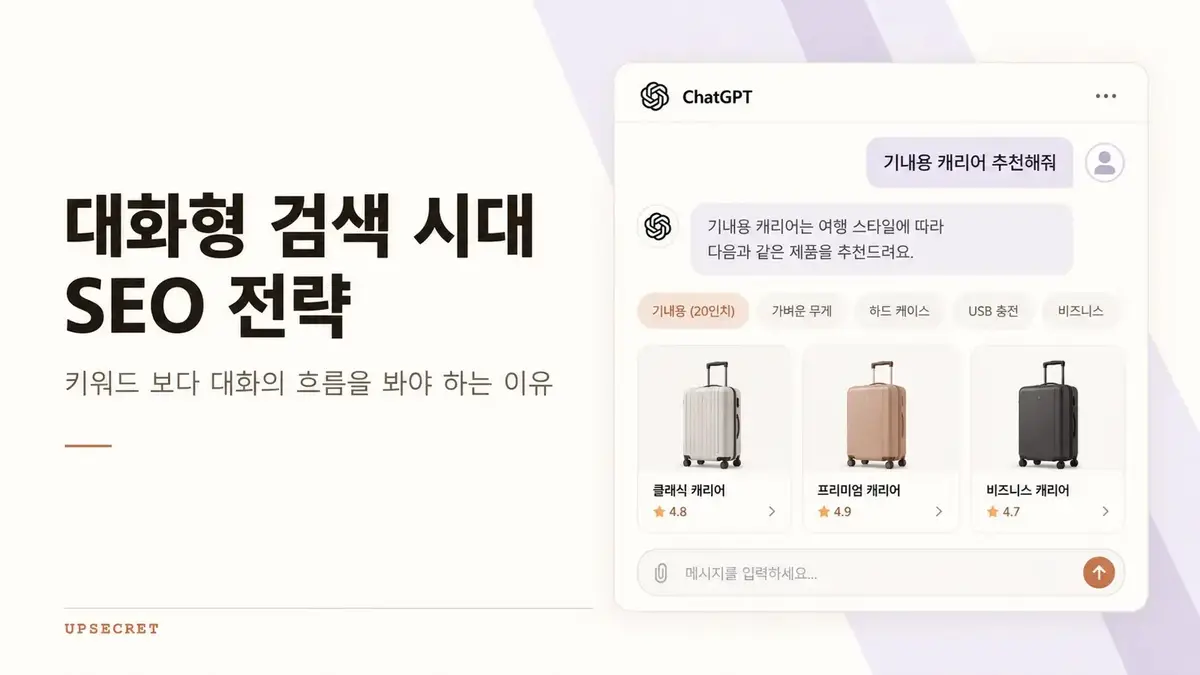
Conversational search SEO is the practice of answering not just one query but the follow-up questions a searcher asks next, using a cluster of linked pages. With Google saying AI Mode passed one billion monthly users at Google I/O 2026, being cited inside an AI answer now matters as much as earning the click.
How much do AI answers cut clicks?
An Ahrefs study of 300,000 keywords in February 2026 found that when an AI Overview appears, the click-through rate of the number one result is about 58% lower. The same analysis in 2025 showed a 34.5% gap, so the effect is growing.
It is not limited to informational searches. Semrush tracked more than 600,000 US desktop keywords between November 2025 and April 2026 and found AI Overview visibility for commercial-intent keywords rose 71% on average over six months. Product and vendor comparisons are now being answered by AI before anyone scrolls.
Which directions do follow-up questions take?
People rarely ask once and stop. Take someone looking for a marketing agency. Their questions usually branch five ways:
- Clarify: "What exactly is performance marketing?"
- Add a constraint: "What can I do with a $3,000 monthly budget?"
- Compare: "Is an in-house team or an agency better?"
- Verify: "Can I trust an agency that guarantees results?"
- Act: "What should I check before signing an agency contract?"
How should a topic cluster be built?
| Page type | Question it owns | Example |
|---|
| Hub | Definition and overview | Performance marketing explained |
| Comparison | Which option is better | In-house vs agency |
| Checklist | What to verify | Agency contract checklist |
| Case study | Did it actually work | Results by industry |
| Update | What changed recently | Platform policy changes |
The hub maps the topic and each supporting page owns one follow-up, linked together so an AI system has a page to cite whatever the next question is. Google launched a generative AI performance report in Search Console in June 2026 and rolled it out globally on August 31, 2026. Google also says no special markup is needed to appear in AI features, and llms.txt is not required.
Takeaways for marketers
- List the five follow-up directions for every priority keyword. Your content calendar comes from that question map.
- Answer in the first paragraph. AI systems quote passages that state the answer directly.
- Link hubs to comparison and checklist pages. The cluster as a whole signals expertise on the topic.
- Use the Search Console AI report. Judge success by citations and impressions, not only clicks.
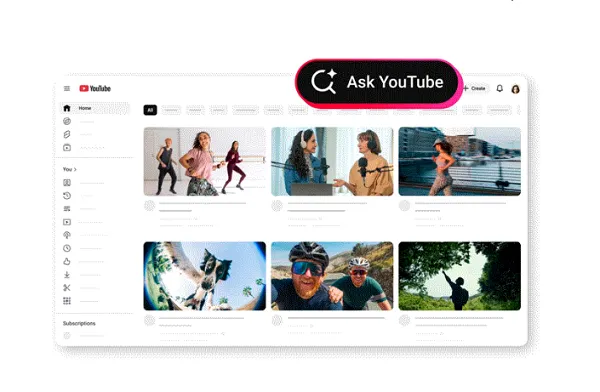
- Expect the same shift beyond Google. YouTube's test of AI answers at the top of search and agentic commerce readiness for online stores point the same way.
We apply this structure to our own posts: a direct answer up top, question-style subheadings and an FAQ at the end.
Source: Mobiinside