Business모비인사이드
AI output review: set a clear handoff standard
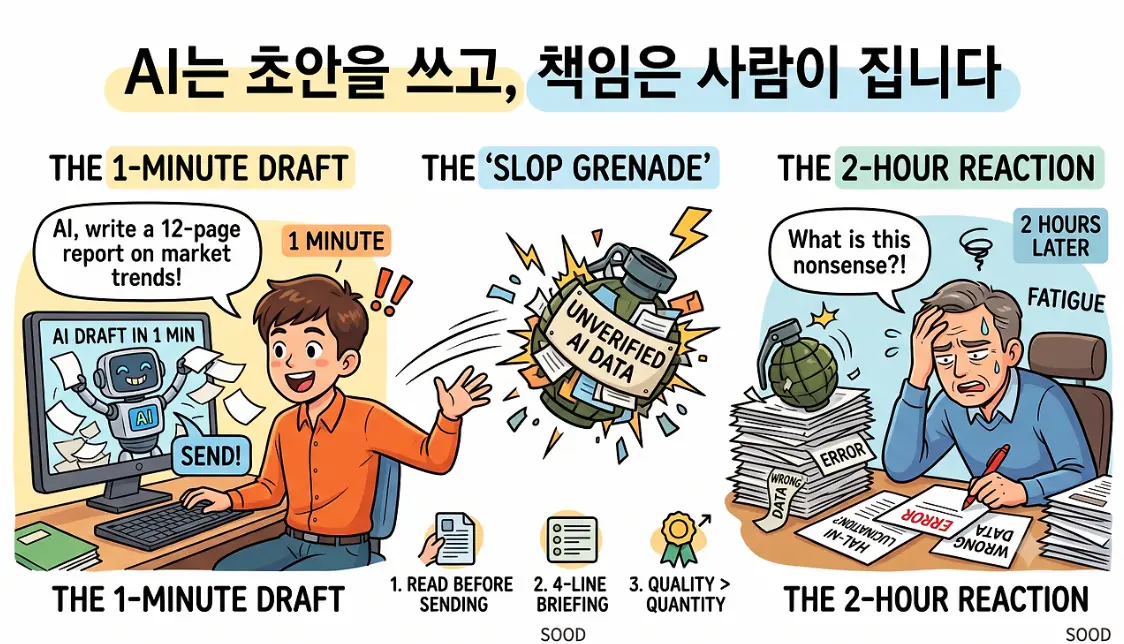
AI output review should begin with the sender. Define evidence, unresolved claims and approval ownership before a marketing report changes hands.

Career transition requires agreement about how experience enters a new team. An experienced hire may know the work yet hesitate to offer ideas when their previous seniority differs from their current position. Clear roles can make contribution easier without blurring decision authority.
A November 4, 2026 Mobiinside column by K's Career Note describes a former executive working as an intern who worried about imposing on colleagues. The writer recommended a private conversation with her manager. This is a personal counseling account, rather than representative research. The original column supplies the context.
The management question extends beyond the individual's manner. If a team recruits experience, it also needs a usable route for that experience to influence the work. Asking someone to be considerate does not specify when to raise a concern, who assesses it, or how a decision comes back. Those are operating choices the manager can clarify.
The following recommendations are our interpretation of the case, rather than outcomes demonstrated by the column. A marketing team can use them when onboarding a colleague whose previous responsibilities differ from the role they now hold.
| Agreement | Practical question |
|---|---|
| Ownership | Who proposes, who reviews, and who decides? |
| Context | Which conditions made earlier experience relevant? |
| Channel | Does this need a private discussion or a team review? |
| Feedback | Who explains whether a proposal will proceed? |
A useful proposal separates observation from assumption. Describe the customer problem that is visible now, identify what remains uncertain, and suggest a bounded test. This gives colleagues something to evaluate without requiring them to accept the authority of a previous title. An old success can inform a hypothesis, but it does not establish that the same approach will work for the current client.
Managers should also avoid treating quiet participation as agreement. Invite contributions on specific questions, make time to assess them, and close the loop after a decision. A route for suggestions is incomplete if people submit ideas and never learn what happened. At the same time, participation should not create an informal second chain of command that leaves junior managers responsible for decisions they did not make.
These principles can shape collaboration with an agency as well. When reviewing Services, agree the scope of responsibility and review authority alongside the capabilities required. The immediate goal is a working relationship in which people can offer expertise, ask questions, and understand who makes the final call. That is a more concrete onboarding objective than expecting everyone to infer the right behavior from age or seniority.
No. It is a personal counseling account and should not be generalized to all experienced hires.
They can agree an appropriate channel with the manager, rather than suppressing useful observations.
Clarify responsibilities, proposal channels, final decision authority, and how feedback will be returned.
To apply what you just read to your own site, start with a free audit of where things are now.
A strategist replies within one business day.
AI output review should begin with the sender. Define evidence, unresolved claims and approval ownership before a marketing report changes hands.

Marketplace sales can be posted in aggregate without losing order visibility. Review the links between source transactions, summaries and performance reports.

A designer portfolio can explain choices, rejected options and learning after release. Show the judgment behind AI-assisted work, not just polished screens.