
Startups모비인사이드
Trainer, Coach, Director: The Three Personas Every Startup Team Lead Must Master
First-time startup team leadership means moving past individual-contributor habits. Here's the trainer-coach-director growth framework.

AI complaint handling can separate the work of producing an answer from the responsibility for sending it. A contributed article about KB Kookmin Bank argues that AI can handle research, organization and drafting while employees retain factual review and the final customer response.
Mobiinside published the Suits and Hood article on November 3, 2026. It draws on Byline Network's coverage of a financial-sector presentation and then offers the contributor's interpretation. According to that account, average complaint handling time fell from 19.7 days to 8.4 days, while unresolved complaints declined from 1,204 to 278.
These figures describe the case as presented in the contributed article. They do not establish that every banking process will improve similarly, or independently prove which part of the change caused the result. The article describes AI taking on information retrieval, organization and draft responses, followed by employees checking facts and responding to customers.
The contributor explicitly labels part of the reconstruction of the new workflow as an interpretation. The bank had not supplied the exact names of the new stages in that account. An inferred division of responsibilities should therefore not be presented as an official process chart.
The article also describes a shift from a central AI team handling every request toward business employees identifying problems and building agents. The central team instead supported technology and the platform. Requests to external AI models passed through a shared gateway applying identity checks, permissions, personal-information masking and records of blocked activity.
This suggests that participation and oversight can be designed together. It does not show that the same structure will fit every organization. Faster handling alone also cannot establish better response accuracy or customer satisfaction; the article provides no basis for making those additional claims.
Our application is to name the person who can authorize each customer-facing response before expanding automated drafting. This matters for service replies, advertising claims and performance reports alike. A task list for AI is incomplete if no one knows who can reject a draft or stop delivery.
Teams can measure corrections and repeat queries alongside turnaround time to distinguish speed from quality. Those measurements are our editorial recommendation, not additional results reported by the bank. For a related approach to review criteria, see AI output review: set a clear handoff standard.
Source: Mobiinside contributed article, November 3, 2026.
They are figures introduced in the Mobiinside contributed article, which draws on coverage of a financial-sector presentation.
The contributor describes employees reviewing facts and drafts before responding to customers.
Name a final approver and define when a customer-facing response must be stopped or corrected.
To apply what you just read to your own site, start with a free audit of where things are now.
A strategist replies within one business day.
First-time startup team leadership means moving past individual-contributor habits. Here's the trainer-coach-director growth framework.
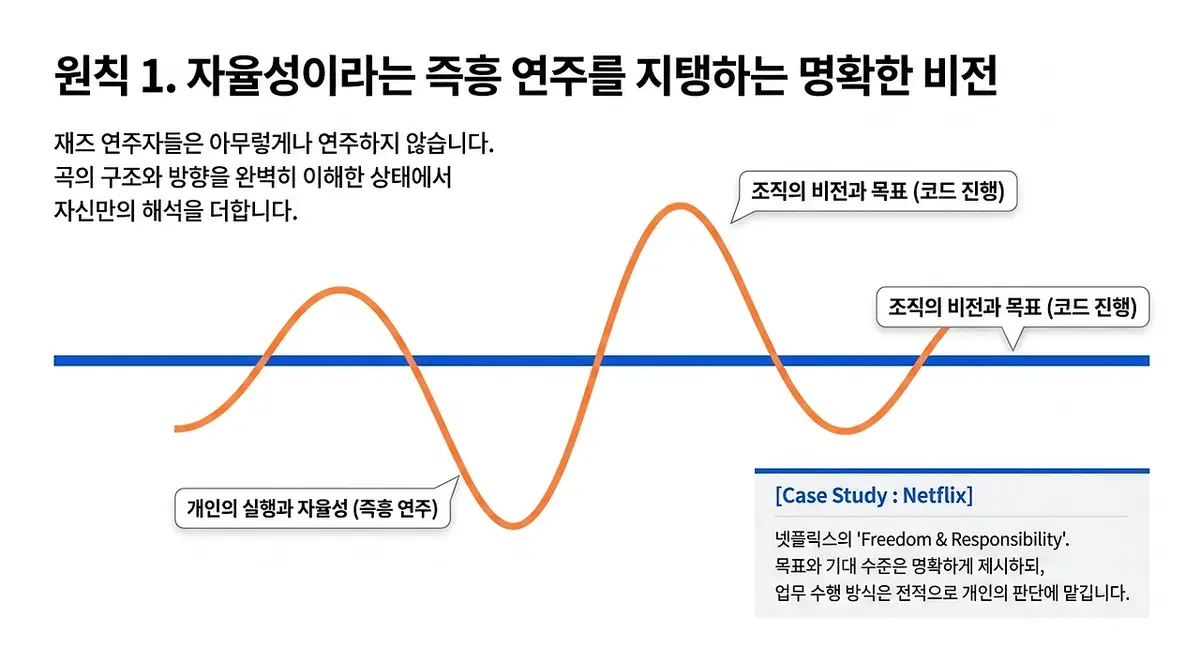
Jazz and startups both thrive on uncertainty. Lessons from Netflix, Slack, and Instagram show how jazz band management builds trust-based, adaptive teams.

One founder gave 50 investor pitches over five years and raised zero funding — while doubling revenue nearly every year. Here's what changed.